
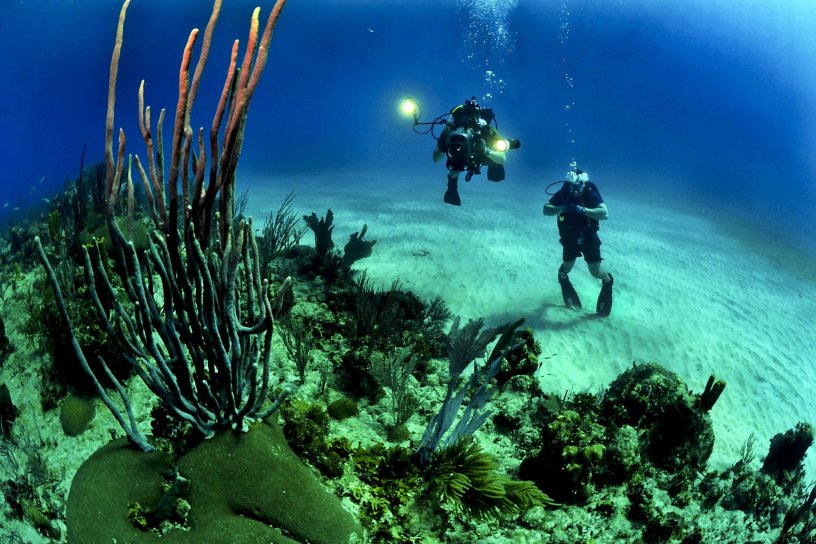
A team of British and Australian researchers claim that playing the sound of healthy coral reefs significantly increases the number and diversity of fish in a damaged reef.
The study found that playing a controlled audio track based off of a recording of a healthy reef was able to double the overall number of fish in a degraded section of the Great Barrier Reef, as well as increase the number of fish species in this section by 50%.
Coral reefs are currently at serious risk from man-made dangers, not least of which is anthropogenic warming of sea waters. This increase in temperature can cause the phenomenon known as coral bleaching by killing off the coral’s symbiotic algae.
Previous research has established that fish are vital to maintaining a healthy coral reef, as they are necessary for certain coral reproductive functions, and many fish prune the reef of potentially harmful algae.
Fish primarily become a part of coral communities via recruitment, where young fish begin their life in the open ocean before being attracted to reefs via a number of cues, including audio clues. As a result, less healthy reefs sound less attractive and are less likely to attract new fish, so being able to mimic healthy reef sounds can make a big difference in restorative fish recruitment.
While mimicking sound alone is unlikely to completely restore coral a damaged coral reef, the team hope that it may be used as part of larger coral reef habitat restoration and conservations efforts.
 Scientific Britannicus